Construction sites are dynamic, high-risk environments where a single misstep can lead to injury or costly delays. Amid cranes, scaffolds, and power tools, one of the most consistent—and underrated—safety tools isn’t a harness or hard hat. It’s the toolbox talk.
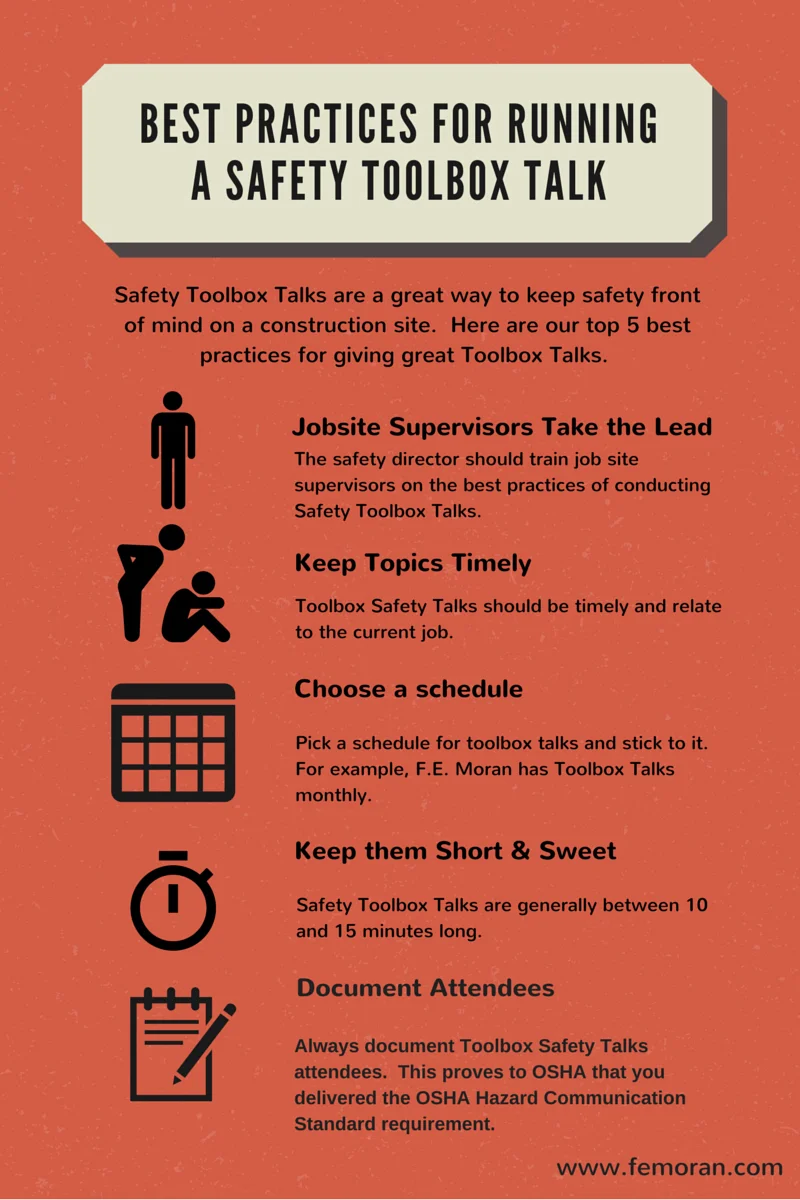
A toolbox talk for construction is a short, focused safety meeting held at the worksite, typically lasting 10 to 15 minutes. These sessions are designed to reinforce safe practices, address emerging hazards, and encourage open communication among crew members. When done right, they don’t just check a compliance box—they save lives.
Yet, too many contractors treat toolbox talks as a formality. Generic topics, rushed delivery, and lack of follow-up render them ineffective. The result? Workers tune out, hazards go unreported, and preventable incidents occur.
This guide breaks down what makes a toolbox talk truly effective, how to structure it, and why it’s more than just a safety ritual.
Why Toolbox Talks Are Non-Negotiable on Construction Sites
Construction remains one of the most hazardous industries. According to OSHA, one in five worker fatalities occurs in construction. Falls, electrocutions, struck-by incidents, and caught-in/between accidents make up the "Fatal Four"—responsible for the majority of deaths on job sites.
Toolbox talks directly combat these risks by:
- Reinforcing hazard awareness before work begins
- Clarifying procedures for high-risk tasks (e.g., working at height, trenching)
- Encouraging crew participation in safety decisions
- Documenting safety communication for compliance audits
Unlike lengthy safety training sessions, toolbox talks are timely and targeted. For example, before starting excavation, a supervisor might lead a 10-minute talk on trench collapse risks, soil classification, and emergency response—making the information immediate and actionable.
When workers see their supervisor take safety seriously through consistent, relevant talks, it fosters a culture where speaking up about risks becomes normal.
What Makes a Toolbox Talk Effective?
Not all toolbox talks are created equal. A successful one is brief, relevant, interactive, and documented.
Consider two scenarios:
- Ineffective Talk:
- A foreman reads from a printed sheet about "general PPE" while workers stand awkwardly in the mud, checking phones. No questions are asked. No site-specific hazards are mentioned. Everyone disperses, and nothing changes.
- Effective Talk:
- The same foreman gathers the crew near the work zone. He points to a recent near-miss: a worker almost tripped over an unmarked cable. The talk focuses on housekeeping and trip hazards. Workers share their own experiences. The supervisor assigns someone to inspect cable routing before work starts. The session is logged.
The difference? Context and engagement.
Key elements of a high-impact toolbox talk:
- Relevance: Tied to current tasks or observed hazards
- Brevity: 5–15 minutes; doesn’t disrupt workflow
- Interaction: Workers are encouraged to speak, ask questions, or share near-misses
- Visuals: Use photos, diagrams, or real equipment to demonstrate risks
- Follow-up: Actions are assigned, and results are checked the next day
For example, during roofing work, a toolbox talk on fall protection should include a quick demo of harness inspection, not just a lecture.
How to Structure a Construction Toolbox Talk

A clear structure keeps the talk focused and efficient. Use this template:
1. Topic Introduction (1–2 min) State the subject clearly: “Today’s talk is about ladder safety during exterior framing.” Explain why it matters: “Last week, a worker in Region 3 suffered a shoulder injury from a ladder slip.”
2. Hazard Breakdown (3–5 min) Detail the risks: - Using ladders on uneven ground - Overreaching while on ladder - Not securing the top or bottom
Use a real example: “This photo shows a ladder placed too far from the wall—angle too steep, high risk of backward fall.”
3. Best Practices (3–4 min) Cover correct procedures: - Use the 4:1 rule (1 foot out for every 4 feet up) - Face the ladder when climbing - Inspect for damage before use
Demonstrate if possible: Have a crew member show proper setup.
4. Crew Input (2–3 min) Ask questions: - “Has anyone had a close call with ladders?” - “What’s one thing we can improve on this site?”
This builds ownership and surfaces hidden issues.
5. Wrap-up & Action (1 min) Summarize key points. Assign actions: “Mario will inspect all ladders today and tag damaged ones.” Record attendance and topic in the safety log.
Stick to one topic per session. Covering “ladders, PPE, and fire safety” in 10 minutes dilutes the message.
Common Mistakes That Undermine Toolbox Talks
Even experienced contractors fall into traps that reduce effectiveness:
- Repetition of generic topics: Talking about “general safety” weekly without addressing real site conditions bores crews and breeds complacency.
- Lack of preparation: Showing up without materials, examples, or focus turns the talk into a monologue.
- Top-down delivery: If only the supervisor speaks, workers disengage. Safety is a team effort.
- No documentation: Without a record, there’s no proof of compliance during an OSHA inspection.
- Ignoring feedback: If workers raise concerns but nothing changes, they stop speaking up.
One mid-sized contractor in Texas realized their injury rate wasn’t dropping despite daily talks. After auditing sessions, they found 70% were recycled content from a generic safety library—none addressed ongoing electrical work or crane lifts. After switching to site-specific topics and adding crew input, near-miss reporting doubled in two months.
Pro Tip: Rotate facilitators. Let experienced workers lead a talk on scaffolding or welding safety. It builds leadership and keeps content fresh.
Integrating Toolbox Talks Into Daily Workflow
The best toolbox talks happen before work starts, not as an afterthought.
Best times to hold them:
- Morning huddle, right after roll call
- Before starting high-risk tasks (e.g., confined space entry)
- After a near-miss or incident
- When introducing new equipment or subcontractors
Schedule them consistently—daily or weekly—but keep topics dynamic. Use a rotating schedule based on the project phase:
| Project Phase | Suggested Toolbox Talk Topics |
|---|---|
| Site Prep | Excavation safety, underground utilities |
| Framing | Ladder safety, fall protection, nail guns |
| Electrical Rough-In | Lockout/tagout, arc flash, PPE |
| Roofing | Fall arrest systems, weather hazards |
| Final Clean-Up | Housekeeping, chemical handling, fire risks |
Digital tools can help: - Use apps like SafetyCulture or iAuditor to schedule, deliver, and log talks - Store completed sessions in the cloud for audits - Send reminders to supervisors
Even low-tech works: a printed sign-up sheet, clipboard, and topic calendar ensure consistency.
Real-World Toolbox Talk Examples
Theory only goes so far. Here are two real examples from active job sites:
Example 1: Concrete Pouring Topic: Concrete delivery and hose handling Hazard: High-pressure lines can whip if disconnected improperly Discussion: - Show a video clip of a hose failure - Review PPE: gloves, face shield, steel-toe boots - Emphasize: “Never stand in front of the nozzle” Crew Input: A worker mentions the delivery area is muddy—team agrees to lay plywood before next pour Action: Supervisor confirms delivery protocol with the concrete supplier
Example 2: Demolition Phase Topic: Dust control and respiratory protection Hazard: Silica exposure from cutting concrete Discussion: - Show OSHA’s PEL (Permissible Exposure Limit) for silica - Demonstrate proper fit-testing for N95 masks - Highlight symptoms of silicosis Crew Input: Workers report fit issues with current masks Action: Safety officer orders new masks in multiple sizes
These examples show how a focused talk leads to tangible safety improvements.
Making Toolbox Talks Stick: Culture Over Compliance
The ultimate goal isn’t just OSHA compliance—it’s building a culture where safety is second nature.
When toolbox talks are predictable, engaging, and lead to real changes, workers start to view them as valuable, not burdensome.
Ways to reinforce culture:
- Recognize workers who speak up during talks
- Share success stories: “Because Juan mentioned the frayed cord, we avoided a shock risk”
- Post summaries on the site bulletin board
- Involve subcontractors—safety includes everyone on site
A general contractor in Colorado reduced recordable incidents by 40% over six months by linking toolbox talk participation to weekly safety bonuses. Not monetary—just public recognition and a catered lunch for the crew.
Small incentives, big impact.
A toolbox talk for construction isn't a formality. It’s a frontline defense against injury and downtime. Done well, it sharpens awareness, strengthens team communication, and creates a safer worksite—one conversation at a time.
Run focused sessions, invite input, document consistently, and act on feedback. Turn every toolbox talk into a moment that matters.
Frequently Asked Questions
What is the ideal length for a toolbox talk? Aim for 10 to 15 minutes. Long enough to cover key points, short enough to maintain attention.
Who should lead a toolbox talk? Supervisors typically lead, but experienced crew members can facilitate—especially on specialized tasks.
How often should toolbox talks be held? Daily or weekly, depending on project complexity and risk level. Always before high-risk activities.
Do toolbox talks need to be documented? Yes. Record the date, topic, facilitator, attendees, and key points. This is critical for OSHA compliance.
Can toolbox talks reduce insurance premiums? Indirectly. Fewer incidents lead to better EMR (Experience Modification Rate), which can lower premiums.
Should subcontractors attend toolbox talks? Absolutely. All personnel on site should participate—safety is universal.
Are printed materials necessary? Not required, but helpful. Handouts, checklists, or visual aids improve retention and engagement.
FAQ
What should you look for in What Is a Toolbox Talk for Construction and Why It Matters? Focus on relevance, practical value, and how well the solution matches real user intent.
Is What Is a Toolbox Talk for Construction and Why It Matters suitable for beginners? That depends on the workflow, but a clear step-by-step approach usually makes it easier to start.
How do you compare options around What Is a Toolbox Talk for Construction and Why It Matters? Compare features, trust signals, limitations, pricing, and ease of implementation.
What mistakes should you avoid? Avoid generic choices, weak validation, and decisions based only on marketing claims.
What is the next best step? Shortlist the most relevant options, validate them quickly, and refine from real-world results.